Key takeaways
- Both formats can be worth considering; neither guarantees a particular outcome.
- Compare whether each partner can speak privately, reach an appropriate clinician and attend consistently.
- Check actual fees, insurance, location rules and technology rather than assuming online is cheaper or available everywhere.
- If there is abuse or fear of retaliation, a different setting alone does not make joint therapy safe.
Compare online and in-person couples therapy by privacy, access, cost and the kind of setting that works for both partners.
Online couples therapy can be a useful alternative to meeting in person, but the better starting point depends on whether both people can speak privately, attend reliably and work with an appropriately qualified clinician. A video session may remove travel; an office may provide a space away from household interruptions. Neither format guarantees that the relationship will improve.
This article is general information, not therapy or a diagnosis. It has not been reviewed by a mental health professional. A clinician can help you consider whether a particular format is appropriate for your circumstances.
Online vs. in-person couples therapy at a glance
On a narrow screen, scroll the table sideways to see both formats.
| Question | Online video | In person |
|---|---|---|
| Getting there | No trip to the office, though each person needs a suitable location and connection. | Travel, accessibility and time away from work or care duties may affect attendance. |
| Privacy | You need a place where you can speak without being overheard or monitored. | An office can offer separation from home; ask about its privacy and accessibility. |
| Conversation | A clinician can see and hear you on video, but camera framing or connection problems may affect what is visible or audible. | Everyone shares a room; some people prefer the setting, while others feel less comfortable there. |
| Where each person is | Separate connections may be possible if the provider supports them and can see both people in their locations. | Both generally travel to the same appointment location. |
| Costs | Ask about session fees, subscription terms and coverage; do not assume it is cheaper. | Ask about fees and coverage, plus any travel, childcare or lost work time. |
| After a hard session | You may return immediately to your home or workplace; agree on what happens when the call ends. | Consider the trip home and whether either person needs space or a separate way to leave. |
For the practical details of a remote appointment, see how virtual couples therapy works. Here the question is which arrangement you can actually use and feel comfortable discussing with the clinician.
Is online couples therapy as effective as in-person therapy?
There is evidence that video-based work can be a viable option, but it does not tell every couple which format will suit them. A 2021 systematic review included 37 papers on videoconferencing psychotherapy for couples and families. It described the approach as feasible and acceptable, with encouraging findings on effectiveness. The review did not conduct a meta-analysis, and it covered family as well as couples work.
A study of 1,157 married clients seeking couples therapy compared treatment data from online and in-person settings. Its authors reported broadly similar outcomes in the settings studied while noting differences in how the therapeutic alliance developed. This was a comparison of treatment data, not proof that the format caused a particular outcome or that the two options are interchangeable for every couple.
Ask about the clinician's experience with couples, how they work in each format and how you will review whether the process is helping. Your goals, the therapist's approach, privacy and each person's willingness to participate all deserve attention alongside the delivery format.
A four-question decision test
Rather than choosing by convenience alone, ask these questions about the actual providers and appointments available to you.
1. Can both people speak privately and safely?
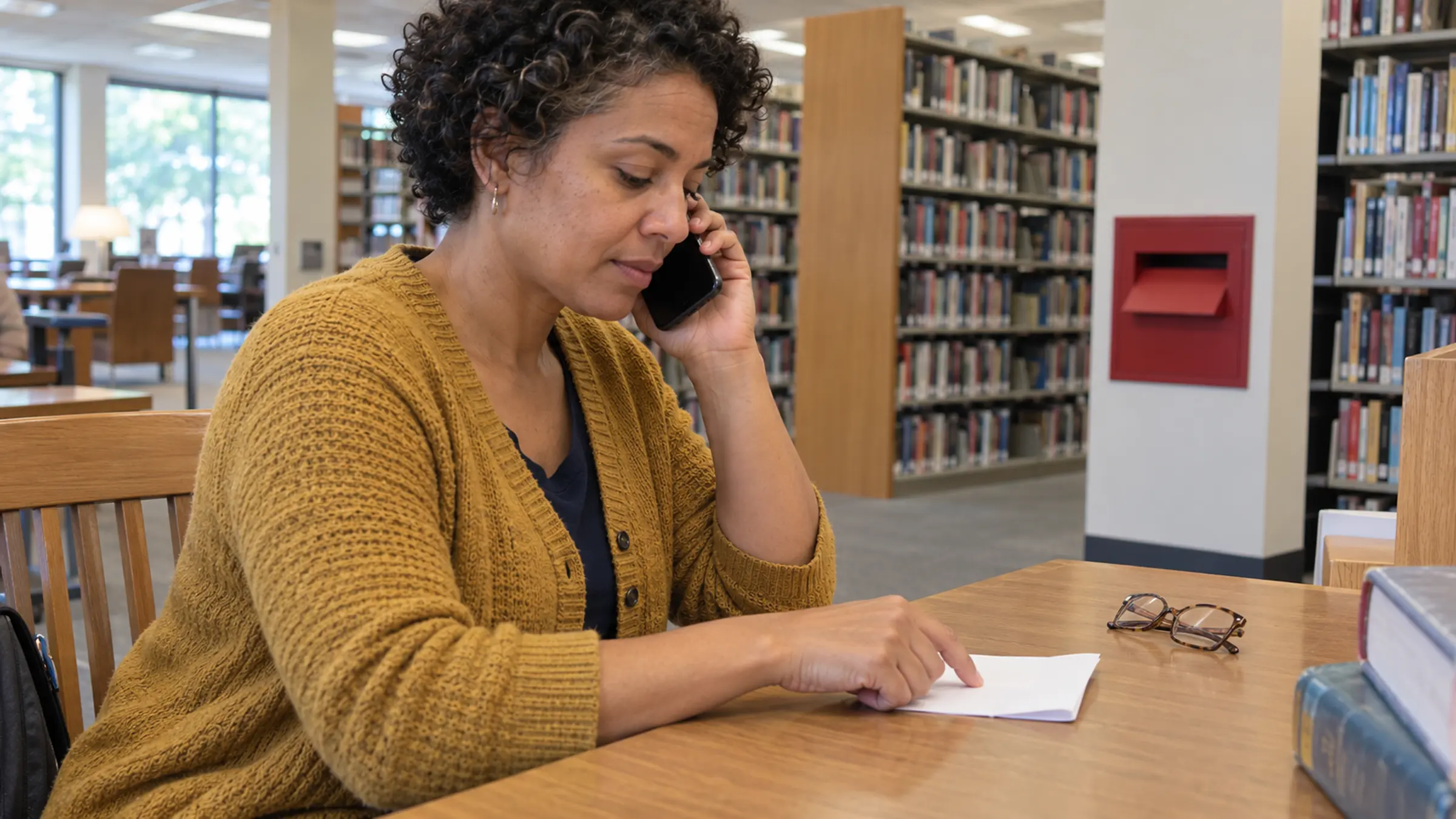
For video, consider who may hear through a door or wall, whether devices or accounts are monitored, and whether each person can speak without pressure. Headphones can reduce what others hear from the therapist, but they do not stop someone nearby from hearing your own voice. HHS suggests considering a private place, such as a suitable room, a private community space or a parked car where you can speak freely.
For an office, ask about privacy, accessibility and whether both people are comfortable with the location. Privacy is different from safety: if one person fears retaliation or is being controlled, moving a joint conversation to an office is not a complete safety plan. See the safety section below.
2. Can you both attend with a suitable clinician?
Compare the actual travel time, work schedules, care responsibilities, accessibility needs and appointments offered. Online sessions can remove a commute, but a reliable connection, suitable device and private space still matter. An office can create a clearer boundary between the appointment and home, but travel or childcare may make it harder to attend.
If you will join from separate places, ask whether the clinician supports separate connections and can provide care where each person is physically located. HHS notes that cross-state practice rules vary; tell the provider about travel or a move before the appointment.
3. What is the complete cost?
Ask each provider for the length and price of a session, cancellation terms, any membership charge and what happens if you need to change format. If you plan to use insurance, confirm the clinician's network status, the service and format covered, any deductible or copay, and what you may owe. Then add practical costs such as transport, childcare and time away from work. There is no universal price winner.
Our guide to insurance and couples therapy explains questions to ask your plan. A quote for individual therapy or an online subscription does not automatically tell you the price of a couples session.
4. What happens when the session ends?
Ask yourselves and the therapist what would help after a difficult conversation. You might want a short quiet period, separate travel arrangements or an agreement to return to everyday tasks before discussing the session further. For online care, ask what to do if the connection drops and how the clinician will contact each person. Agree on a plan with the provider instead of assuming every service offers the same backup.
A hypothetical comparison
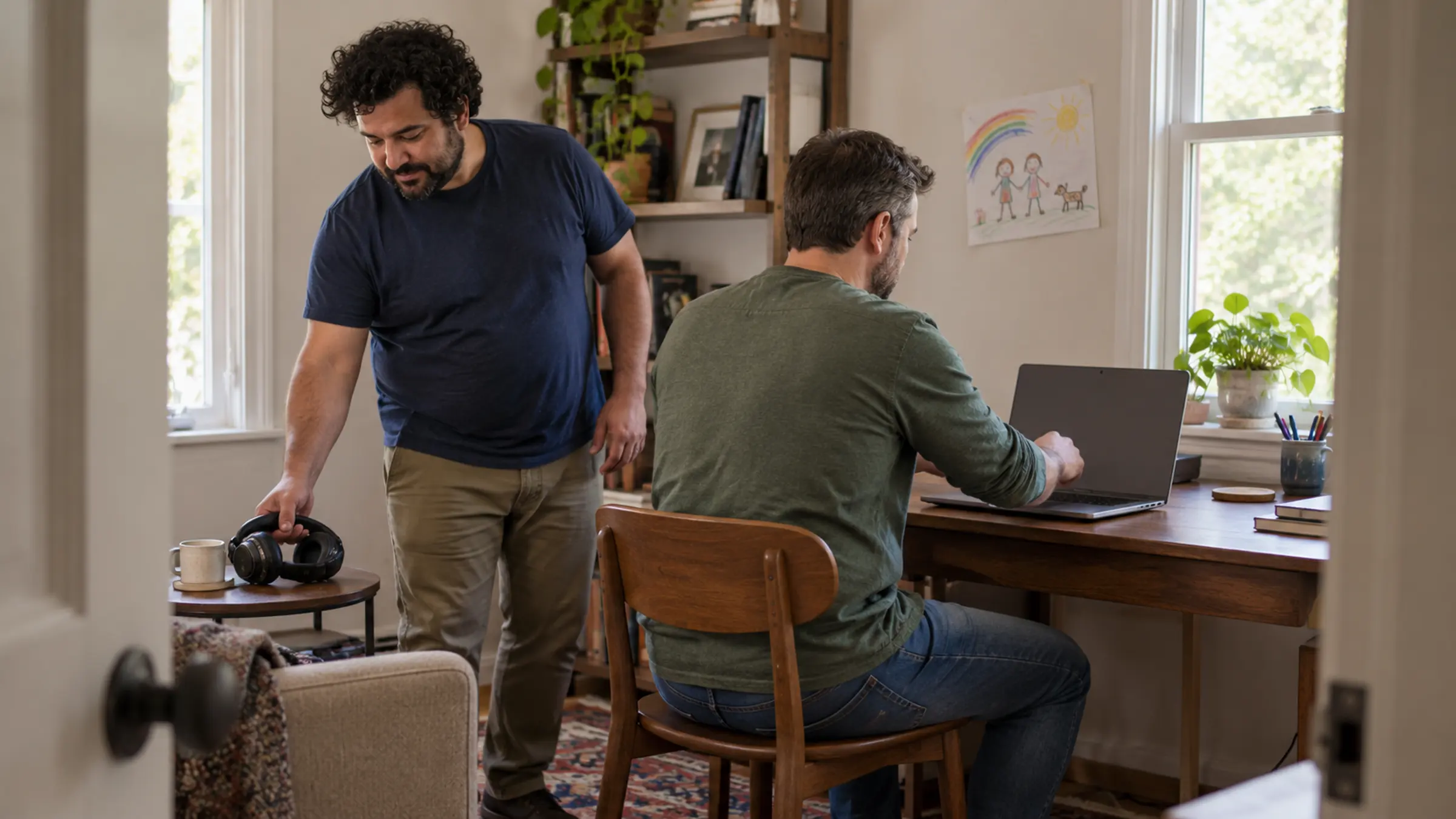
Imagine two partners whose preferred therapist is a long drive away. Video would make the appointment easier to schedule, but one partner works from a shared home where conversations can be overheard. They could ask whether a private room elsewhere is available, compare an office appointment or discuss a combination if the provider offers it. If neither person can speak freely online, saved travel time does not resolve the privacy problem. They can review the choice after trying a suitable arrangement; they do not have to make a permanent decision on day one.
When safety matters more than the format
If there is abuse, coercion, monitoring or fear of retaliation, do not assume a video call or an office session will make joint counseling safe. The National Domestic Violence Hotline advises against couples counseling with an abusive partner because the process and disclosures can create additional risk.
Consider confidential support from a domestic violence advocate or a clinician experienced in this area, using a device and method of contact that are safe for you. In the United States, the Hotline can be reached at 800-799-SAFE (7233), by texting START to 88788, or through its website. If you are in immediate danger, contact local emergency services when safe. Not every disagreement is abuse, and this article cannot assess your situation.
Questions to ask before booking
- What is your experience working with couples and with the concerns we want to discuss?
- Which formats do you offer, and can we switch later if a format does not work for us?
- How do you handle privacy, separate locations, consent and any individual meetings?
- What will a session cost, and what should we confirm with our insurer?
- What is the plan for a lost connection, an emergency or a need for a break?
- How will we review whether the process is helpful, and what can we do if it is not?
Both people can bring different preferences to the first conversation. If one person does not wish to attend, they do not have to be forced into a joint session; the other can explore individual support for relationship concerns.
FAQ
Is online couples therapy as effective as in-person therapy?
Some research supports video-based work as an option, and one study found broadly similar outcomes in the settings studied. That evidence does not guarantee equal results for every couple or clinician.
Is online couples therapy cheaper?
Not necessarily. Compare actual fees and insurance terms, plus any subscription, travel, childcare or time away from work.
Can we join from different locations?
Sometimes. Check that the clinician supports separate connections and is authorized to see each person where they will be located.
Can we switch between online and in-person sessions?
Some providers offer both. Ask about availability, fees, coverage and location requirements before relying on a mixed arrangement.
What if we do not have a private room?
Ask about another private location or an office appointment. If you fear monitoring or retaliation, consider confidential safety-aware support rather than treating the problem as only a choice of room.
Written by Caleb Merridan for reflection and relationship education. Editorial policy · Report a correction