

Everyday Couple Choices Tournament
A playable couples choice game where 32 everyday preferences about dates, home life, planning, privacy, and affection compete until one shared-life winner survives.
Start Playing in 3 Steps
Make one matchup choice at a time until the bracket produces a clear winner.
- 1
Start
Begin with 32 relationship preferences.
- 2
Choose
Pick the option you would rather keep in each matchup.
- 3
Narrow
Watch the bracket move from broad choices to one survivor.
- 4
Discuss
Use the winner to start a low-pressure conversation.

32 options enter.

Voice messages

Partner-made meals

New restaurants

Tiny home, big view

Huge closed-off home

One shared blanket

Separate sleep setups

Repeat the first date
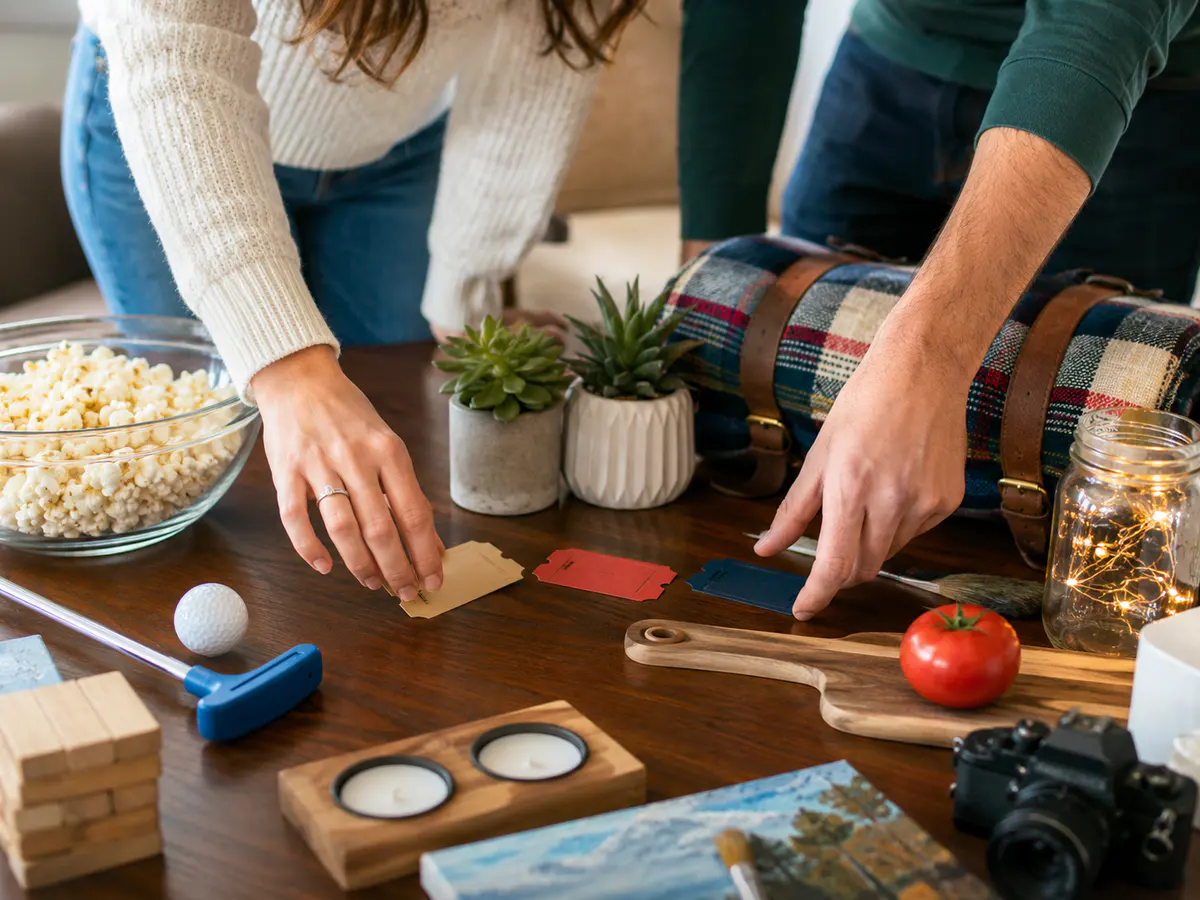
Never repeat a date

Always early

Always running late
What is Everyday Couple Choices Tournament?
Everyday Couple Choices Tournament is a relationship game for couples who want a playful way to compare everyday preferences, private boundaries, routines, planning styles, affection, and shared-life choices. It helps when the relationship question is not one big serious decision, but many small either-or preferences that shape how daily life together feels.
Everyday Couple Choices Tournament turns a broad relationship topic into small choices that are easy to answer in the moment. Instead of asking both people to explain everything at once, the game gives one matchup at a time and lets the pattern build gradually.
That makes it useful for couples who want a playful way to compare everyday preferences, private boundaries, routines, planning styles, affection, and shared-life choices. The format keeps the conversation playful while still making preferences, boundaries, and repeated choices easier to notice.
Why it works for couples
The bracket makes broad compatibility questions easier by turning them into quick side-by-side choices. As options survive, both people can see whether they keep choosing comfort, novelty, privacy, planning, honesty, family closeness, or independence.
A bracket lowers the pressure because each decision is only between two options. The choice can be quick, but the reason behind the choice often gives both people something more specific to discuss.
As options survive, the game shows a pattern without forcing a serious label. One person may keep choosing comfort, novelty, privacy, repair, humor, or planning, and that pattern can become the real conversation.
How the gameplay works
Start with thirty-two relationship preference options and choose which one you would rather keep in each matchup. The game moves from a round of 32 to a single winner, so the final result feels earned without asking either person to rank everything at once.
Start the game, read the two options on screen, and pick the one you would rather keep. The winner moves forward while the other option leaves the bracket.
The rounds keep narrowing the field until one final choice remains. Replay is useful because mood, timing, energy, and recent relationship context can change what feels easiest to choose.
How to read your result
The winning choice is not a fixed compatibility score. It is the preference that survived this playful round, which makes it useful for starting a conversation about what each person protects, enjoys, avoids, or wants more often.
The final winner should be treated as a prompt, not proof. It says what survived this round of decisions, but it does not define the whole relationship or decide what both people must do next.
The best follow-up is to ask why that option kept winning. The answer may point to a need for rest, a wish for novelty, a privacy boundary, a repair style, or a small daily preference that deserves more attention.
When to play
Use it on a date night, a quiet couch night, a long-distance call, after a small conflict, when conversation feels stuck, or before making a shared plan. Keep the tone curious: the goal is to understand the choice, not win the argument.
This format works best when both people want a lighter way into a topic. It can soften a planning conversation, restart a quiet night, or give long-distance partners a shared activity that does not require a heavy agenda.
If a real boundary, conflict, or safety issue comes up, pause the game and handle that directly. The game is meant to open language, not replace repair or pressure someone into a choice.
What you can take away
The value is the conversation that follows the choice. A short game can make preferences easier to name because the first step is only a small decision.
A useful takeaway may be practical, like a date idea or a planning preference. It may also be emotional, like noticing that one person needs more privacy, clearer repair, smaller gestures, or more spontaneity.
Write down the winner only if it helps. The stronger move is to name one thing the bracket clarified and one small action both people can try after the game ends.
- A clearer read on the daily-life preferences that feel easiest to choose.
- A playful way to compare privacy, routines, affection, planning, food, travel, sleep, and repair styles.
- A low-pressure opening for talking about compatibility without turning the moment into a serious test.
How it compares with ordinary question pages
Caleb Merridan Games turn relationship experience into playable choices, reveals, results, and next-step prompts. You still get conversation starters, but the interaction gives both people more to react to than a static list.
Static prompts can start a conversation. The game adds choices, reveal moments, and a clearer next step.
How you start
Read a list of questions and pick one to discuss.
Interactive
Make a small choice together so the conversation begins naturally.
What you compare
Mostly the answers you say out loud.
Interactive
Choices, reasons, surprises, and the pattern behind the result.
What the result means
Usually no result, or a simple score without much context.
Interactive
A final relationship preference winner, plus the choices that showed what kind of shared life felt easiest to keep.
Pressure level
Can feel like a serious talk if the question is direct.
Interactive
Lighter than a formal check-in, but more useful than scrolling for prompts.
| What changes | Static question list | Interactive |
|---|---|---|
| How you start | Read a list of questions and pick one to discuss. | Make a small choice together so the conversation begins naturally. |
| What you compare | Mostly the answers you say out loud. | Choices, reasons, surprises, and the pattern behind the result. |
| What the result means | Usually no result, or a simple score without much context. | A final relationship preference winner, plus the choices that showed what kind of shared life felt easiest to keep. |
| Pressure level | Can feel like a serious talk if the question is direct. | Lighter than a formal check-in, but more useful than scrolling for prompts. |
Use the result to start a conversation.
These activities are written and published by Caleb Merridan. Quizzes reflect the answers you choose; they are not clinical assessments and cannot establish what another person feels. Games offer optional prompts. You can skip a question or stop at any time.
Read our editorial standards or report a problem. If you are worried about your safety, seek appropriate support rather than relying on a score.
Play next

Frequently Asked Questions
Is Everyday Couple Choices Tournament free to play?
Yes. This game currently opens as a free preview, so you can play the bracket without buying credits first.
How many choices are in the tournament?
The first version uses 32 relationship preference choices, which means the bracket starts with a round of 32 and narrows to one winner.
Can I play it alone?
Yes. You can play alone to notice your own preferences, or play with a partner and compare why each choice won.
What does the final winner mean?
The winner is a conversation starter, not a compatibility score. It shows which preference survived this round of quick choices.
Is this relationship advice?
No. It is a playful relationship game. Use it for reflection and conversation, not as a diagnosis of the relationship.
Can I replay the bracket?
Yes. Replay can produce a different winner because small mood, energy, and context changes can shift which options feel easiest to keep.