Red Flag or Green Flag
Sort dating and relationship scenarios into green flag, conversation, or red flag.
Start Playing in 3 Steps
Start solo for a quick preview, or create a private partner link so both people can answer before the reveal.
- 1
Read the behavior
Treat the card as a repeated pattern, not a one-off joke.
- 2
Make the call
Choose Green flag, Depends, or Red flag before reading the feedback.
- 3
Name the boundary
Use the result to say what would make the behavior healthy or unsafe.
Scenario Deck
They remember a small detail you mentioned once and follow up later.
They joke about being jealous whenever you see friends.
They say they are busy but offer a specific time to reconnect.
They get cold whenever you set a normal boundary.
They are private online but consistent and warm in real life.
They are kind to you but rude to service staff.
They ask before posting a couple photo.
They say every ex was crazy and take no responsibility.
They keep plans flexible but never leave you guessing.
What is Red Flag or Green Flag?
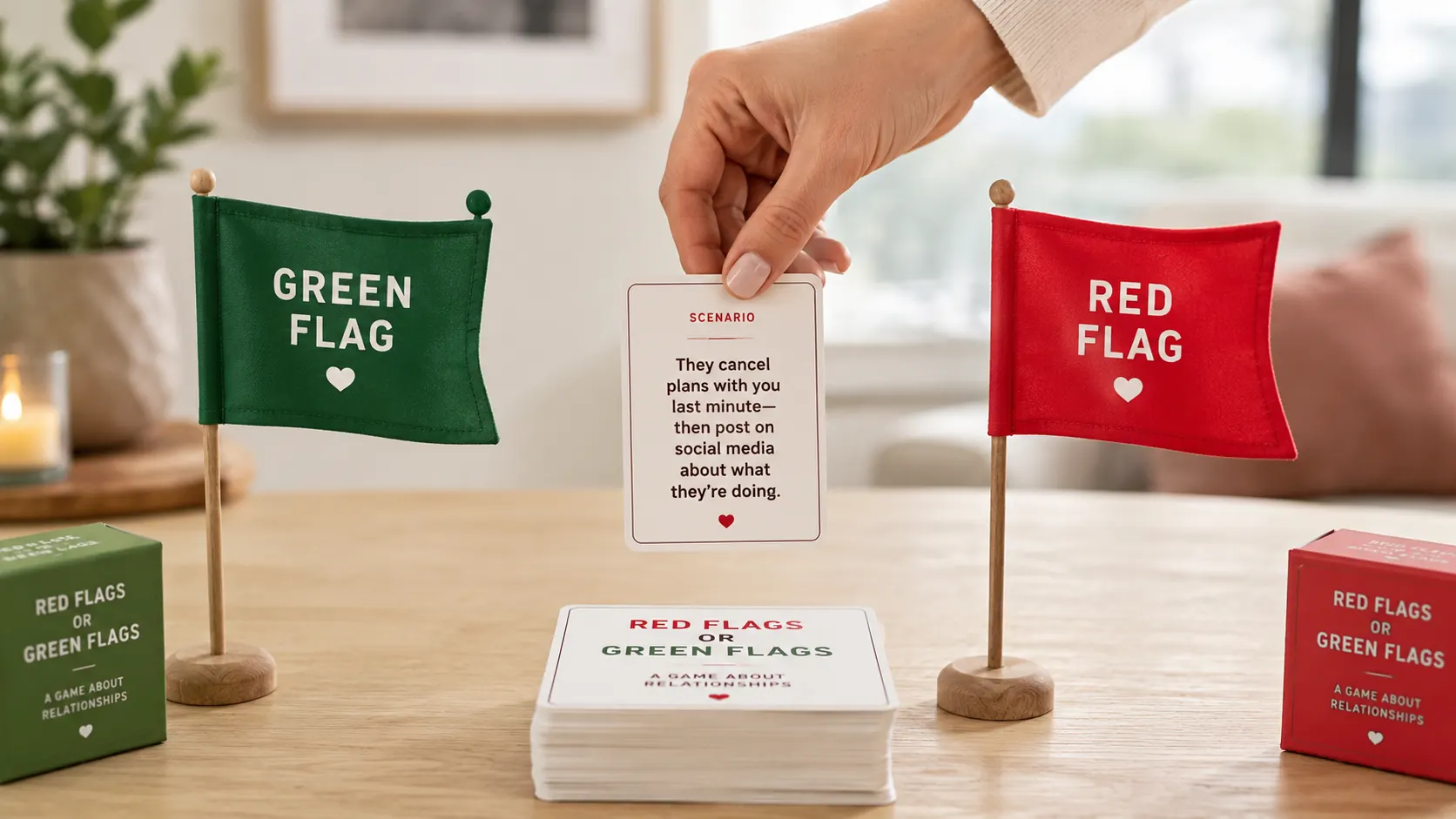
Red Flag or Green Flag is a relationship game for people who want to judge whether a dating or relationship behavior is healthy, context-dependent, or unsafe.
Sort dating and relationship scenarios into green flag, conversation, or red flag.
The game is built around real playable content such as "They apologize quickly, but repeat the same behavior every week. Repair without changed behavior can still create instability.", "They remember a small detail you mentioned once and follow up later. Attention over time often matters more than dramatic words.", "They joke about being jealous whenever you see friends. Jealousy can sound playful while still testing your freedom.", and "They say they are busy but offer a specific time to reconnect. A clear alternative can show care even when timing is hard.". Those examples give the page more than a generic relationship prompt because they show the exact kind of choice, question, clue, score, or challenge the player will meet.
Red Flag or Green Flag is best for 1-2 players who want a 6-10 min interaction with scenario cards, solo boundary read, partner comparison, and result analysis.
Why it works for couples
The format works because it makes judge whether a dating or relationship behavior is healthy, context-dependent, or unsafe easier to approach through play.
Instead of asking for a serious explanation first, the game starts with a concrete move: Treat the card as a repeated pattern, not a one-off joke., Choose Green flag, Depends, or Red flag before reading the feedback., and Use the result to say what would make the behavior healthy or unsafe.. That lowers pressure and gives both people something specific to respond to.
The content is narrow enough to create useful conversation. A card like "They apologize quickly, but repeat the same behavior every week. Repair without changed behavior can still create instability.", "They remember a small detail you mentioned once and follow up later. Attention over time often matters more than dramatic words.", "They joke about being jealous whenever you see friends. Jealousy can sound playful while still testing your freedom.", and "They say they are busy but offer a specific time to reconnect. A clear alternative can show care even when timing is hard." points to a real preference, boundary, attraction cue, repair need, date idea, or social read instead of leaving the couple with a vague topic.
Because the interaction has a reveal, result, vote, score, winner, draw, or follow-up, the conversation has a natural second step. Players can talk about why the answer fit, what surprised them, and what they would do differently next time.
How the gameplay works
Red Flag or Green Flag uses a self judgment format, so the player does not have to invent the structure from scratch.
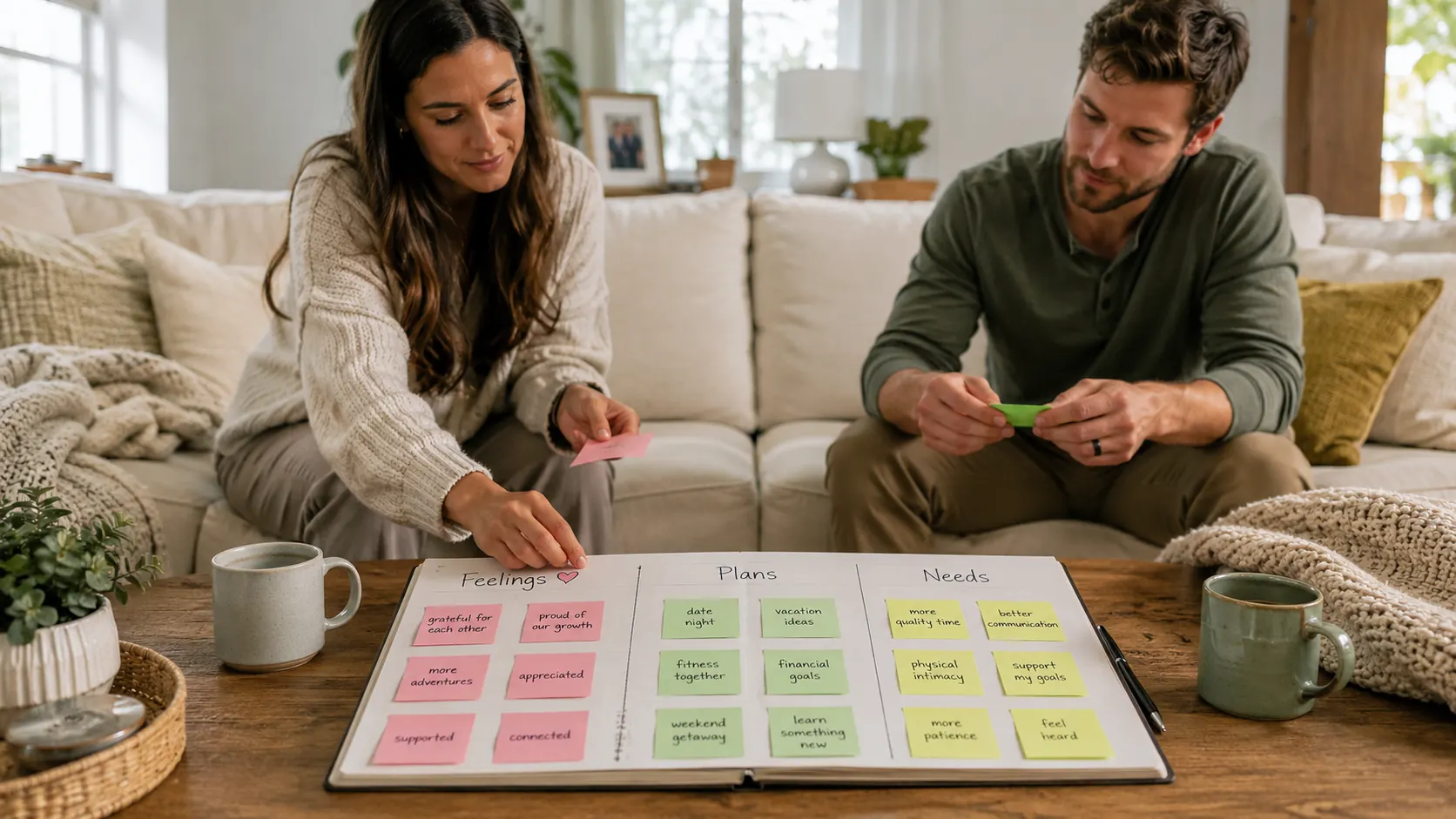
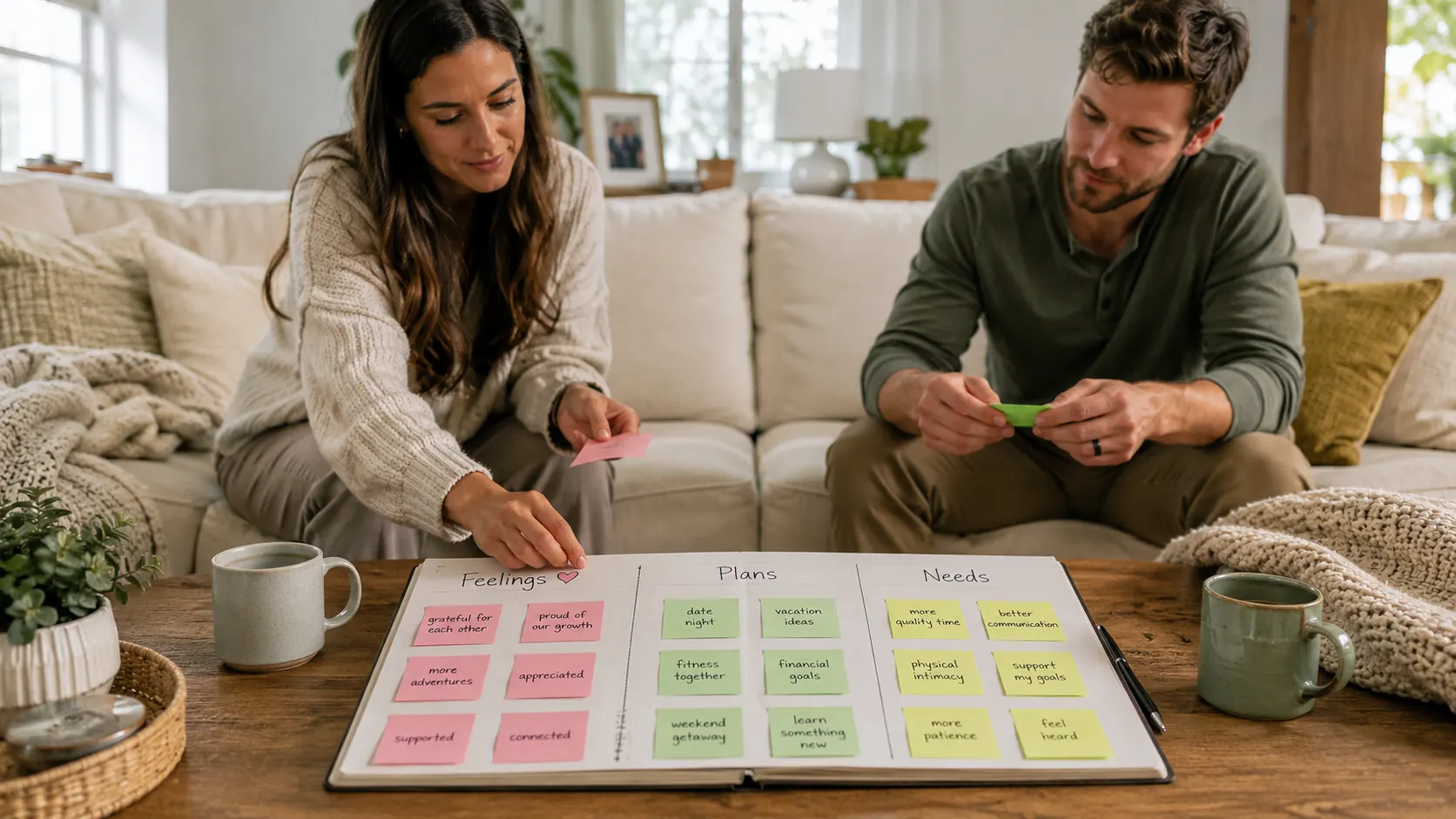
The basic flow is: Read the behavior: Treat the card as a repeated pattern, not a one-off joke. Make the call: Choose Green flag, Depends, or Red flag before reading the feedback. Name the boundary: Use the result to say what would make the behavior healthy or unsafe.
The current game includes 4 representative content examples in this guide, and the playable deck itself contains enough rounds to replay without feeling like the same prompt is doing all the work.
The interface keeps the action small. You answer, choose, rate, spin, draw, vote, or follow a branch, then use the on-screen result or prompt to decide what the moment means.
How to read your result
The result is a relationship signal to discuss, not a diagnosis of a person or a permanent label.
A green, cautious, or red answer should be read through the actual scenario in front of you: context, repetition, secrecy, pressure, repair, and respect all matter.
The useful move is to name what the result clarified. It may show a real boundary, a place where more context is needed, or a pattern that should not be brushed off as a joke.
When to play
Play Red Flag or Green Flag when the relationship needs a specific starting point more than another broad talk about feelings.
It fits couple challenge moments: date nights, quiet couch nights, long-distance calls, group hangs, low-energy weekends, or the moment when both people want connection but do not know how to begin.
Keep the tone curious. If the game reveals a real boundary, a strong reaction, or a repeated pattern, pause the game long enough to treat that answer with care.
Because the expected session is 6-10 min, it can work as a quick opener or as the first step into a longer conversation.
What you can take away
The useful outcome is not only finishing Red Flag or Green Flag. It is leaving with clearer language for the choice, pattern, or preference the game surfaced.
Compare your instincts around effort, repair, honesty, attention, and emotional safety. That one-line payoff should become something practical: a question to ask, a plan to try, a boundary to name, or a detail to remember next time.
- Judge whether a dating or relationship behavior is healthy, context-dependent, or unsafe.
- Compare your instincts around effort, repair, honesty, attention, and emotional safety.
- A clearer read on scenario cards, solo boundary read, partner comparison, and result analysis.
How it compares with ordinary question pages
Caleb Merridan Games turn relationship experience into playable choices, reveals, results, and next-step prompts. You still get conversation starters, but the interaction gives both people more to react to than a static list.
Static prompts can start a conversation. The game adds choices, reveal moments, and a clearer next step.
How you start
Read a list of questions and pick one to discuss.
Interactive
Make a small choice together so the conversation begins naturally.
What you compare
Mostly the answers you say out loud.
Interactive
Choices, reasons, surprises, and the pattern behind the result.
What the result means
Usually no result, or a simple score without much context.
Interactive
A clear scenario result that helps name whether the moment feels healthy, uncertain, or worth a firmer boundary.
Pressure level
Can feel like a serious talk if the question is direct.
Interactive
Lighter than a formal check-in, but more useful than scrolling for prompts.
| What changes | Static question list | Interactive |
|---|---|---|
| How you start | Read a list of questions and pick one to discuss. | Make a small choice together so the conversation begins naturally. |
| What you compare | Mostly the answers you say out loud. | Choices, reasons, surprises, and the pattern behind the result. |
| What the result means | Usually no result, or a simple score without much context. | A clear scenario result that helps name whether the moment feels healthy, uncertain, or worth a firmer boundary. |
| Pressure level | Can feel like a serious talk if the question is direct. | Lighter than a formal check-in, but more useful than scrolling for prompts. |
Use the result to start a conversation.
These activities are written and published by Caleb Merridan. Quizzes reflect the answers you choose; they are not clinical assessments and cannot establish what another person feels. Games offer optional prompts. You can skip a question or stop at any time.
Read our editorial standards or report a problem. If you are worried about your safety, seek appropriate support rather than relying on a score.
Play next

Frequently Asked Questions
How do I play the Red Flag or Green Flag scenario card game?
Read each situation, pick the option that feels closest, then use the reveal to talk about the pattern behind your choice.
What does the final Red Flag or Green Flag result mean?
It summarizes the choices you made in this run. Treat it as a prompt about boundaries, repair, or mixed signals, not as proof.
Can I play Red Flag or Green Flag on my phone?
Yes. This scenario card relationship game is built for mobile browsers, so you can play it on a phone, tablet, or desktop without installing an app.
Can I invite my partner to play Red Flag or Green Flag?
Yes. Use the partner link when it is available so both people can join the same round instead of passing one phone back and forth.
Will my partner see my answers in the Red Flag or Green Flag two-player mode?
No. In the two-player flow, each person answers first, then the game waits for both sides before opening the reveal.
Is Red Flag or Green Flag free, or does this couple game use credits?
The basic mode is free to start. Credits are only used if you choose partner mode or the result analysis; the launch screen shows the cost before anything is spent.
What happens if I run out of credits in Red Flag or Green Flag?
You can still use the free starting mode when it is available. Paid choices such as partner mode or the result analysis stay locked until you add or regain credits.