What Is the Most Awkward First-Date Moment?
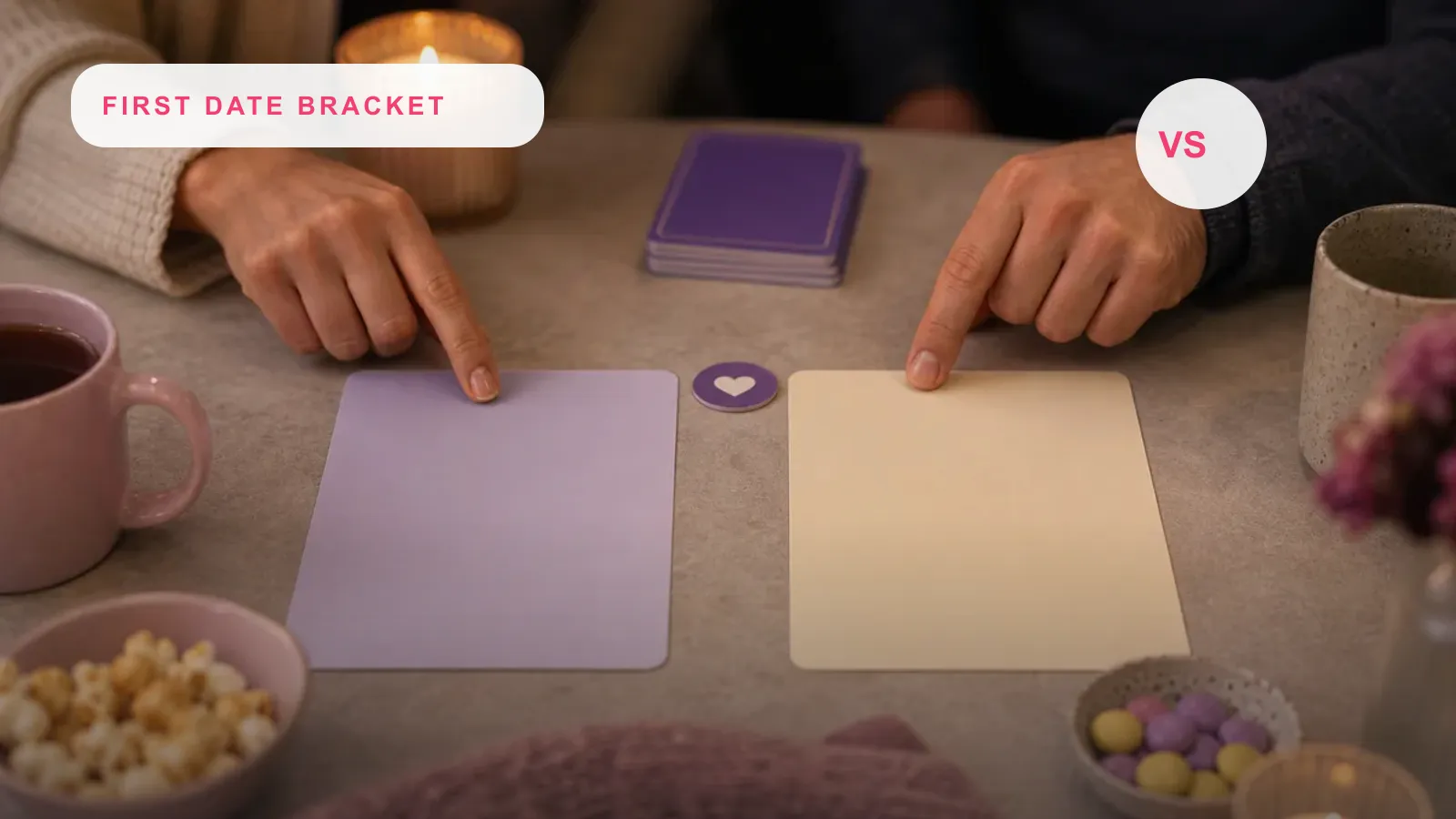
A fast this-or-that tournament where sixteen first-date disasters compete until the most awkward winner survives.
Start Playing in 3 Steps
Make one matchup choice at a time until the bracket produces a clear winner.
- 1
Start the bracket
Read two awkward first-date moments as if they happened tonight.
- 2
Pick the harder recovery
Choose the one that would make the date feel more difficult.
- 3
Use the winner
Talk about what would repair that moment or make it a dealbreaker.
16 options enter.

A friend's 'Did you win them over?' text popping up while showing your phone

Accidentally bringing up your ex

Claiming you love books, then blanking when asked what you last read

Your best friend calling and their saved contact name being wildly embarrassing
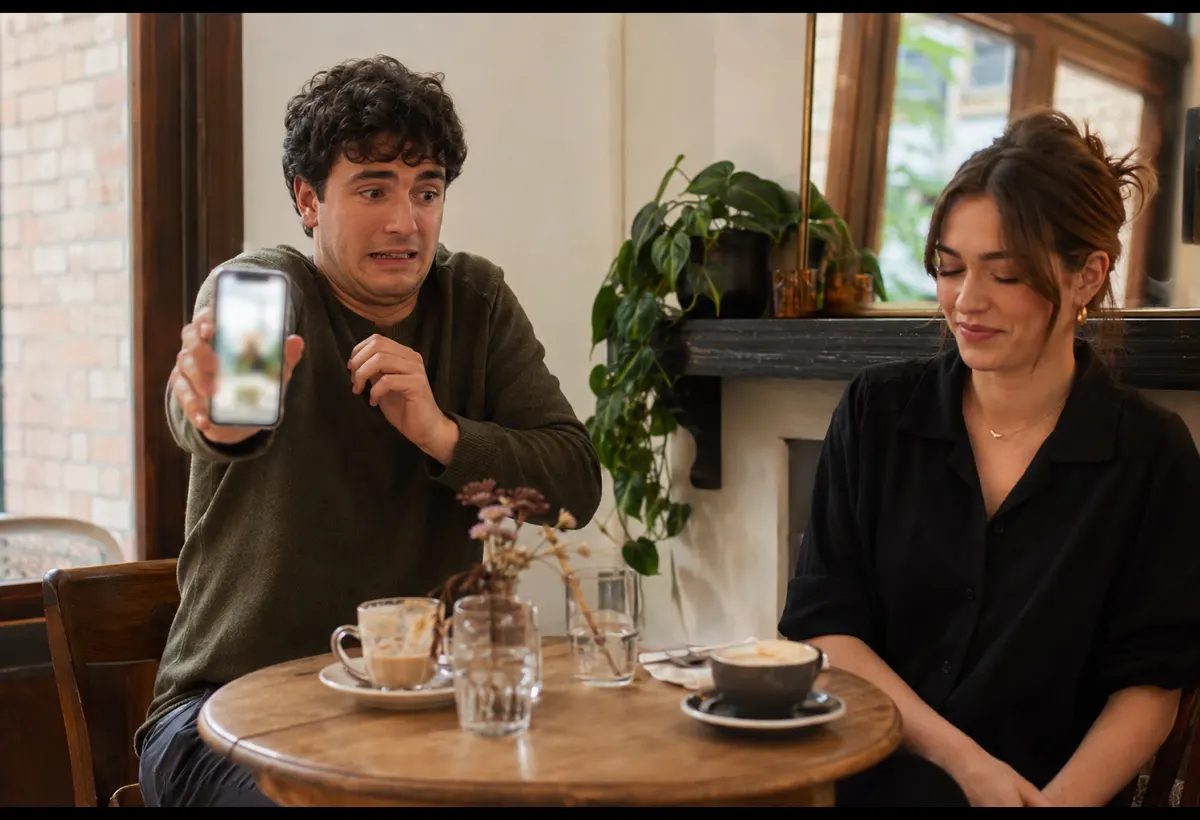
Swiping through photos and accidentally revealing a crying selfie

Liking them so much you suddenly go silent

Waking up with a huge pimple on the morning of the date

Laughing while eating and food flying out

Dressing wrong for the weather and sweating through the date

Forgetting their name

Failing to park the car for ten minutes
What is What Is the Most Awkward First-Date Moment?
What Is the Most Awkward First-Date Moment? is a relationship game for couples who want a quick two-choice game for comparing preferences and making a small decision together. It helps when a topic feels too vague to discuss directly but easy enough to explore through choices.
What Is the Most Awkward First-Date Moment? turns a broad relationship topic into small choices that are easy to answer in the moment. Instead of asking both people to explain everything at once, the game gives one matchup at a time and lets the pattern build gradually.
That makes it useful for couples who want a quick two-choice game for comparing preferences and making a small decision together. The format keeps the conversation playful while still making preferences, boundaries, and repeated choices easier to notice.
Why it works for couples
The bracket makes preference discovery easier by asking for one light decision at a time. Each matchup shows what survives when two possible answers compete.
A bracket lowers the pressure because each decision is only between two options. The choice can be quick, but the reason behind the choice often gives both people something more specific to discuss.
As options survive, the game shows a pattern without forcing a serious label. One person may keep choosing comfort, novelty, privacy, repair, humor, or planning, and that pattern can become the real conversation.
How the gameplay works
Pick between two options in each round, let the winners advance, and keep going until one final choice remains.
Start the game, read the two options on screen, and pick the one you would rather keep. The winner moves forward while the other option leaves the bracket.
The rounds keep narrowing the field until one final choice remains. Replay is useful because mood, timing, energy, and recent relationship context can change what feels easiest to choose.
How to read your result
The winner is a conversation cue, not a fixed label. Use it to ask why that option kept winning and what it says about this moment.
The final winner should be treated as a prompt, not proof. It says what survived this round of decisions, but it does not define the whole relationship or decide what both people must do next.
The best follow-up is to ask why that option kept winning. The answer may point to a need for rest, a wish for novelty, a privacy boundary, a repair style, or a small daily preference that deserves more attention.
When to play
Use it on a date night, a quiet couch night, a long-distance call, after a small conflict, when conversation feels stuck, or before making a shared plan. Keep the tone curious: the goal is to understand the choice, not win the argument.
This format works best when both people want a lighter way into a topic. It can soften a planning conversation, restart a quiet night, or give long-distance partners a shared activity that does not require a heavy agenda.
If a real boundary, conflict, or safety issue comes up, pause the game and handle that directly. The game is meant to open language, not replace repair or pressure someone into a choice.
What you can take away
The value is the conversation that follows the choice. A short game can make preferences easier to name because the first step is only a small decision.
A useful takeaway may be practical, like a date idea or a planning preference. It may also be emotional, like noticing that one person needs more privacy, clearer repair, smaller gestures, or more spontaneity.
Write down the winner only if it helps. The stronger move is to name one thing the bracket clarified and one small action both people can try after the game ends.
- A clearer preference
- A lighter opening for conversation
- A result you can discuss or act on
How it compares with ordinary question pages
Caleb Merridan Games turn relationship experience into playable choices, reveals, results, and next-step prompts. You still get conversation starters, but the interaction gives both people more to react to than a static list.
Static prompts can start a conversation. The game adds choices, reveal moments, and a clearer next step.
How you start
Read a list of questions and pick one to discuss.
Interactive
Make a small choice together so the conversation begins naturally.
What you compare
Mostly the answers you say out loud.
Interactive
Choices, reasons, surprises, and the pattern behind the result.
What the result means
Usually no result, or a simple score without much context.
Interactive
A final winner that gives the conversation a specific next question.
Pressure level
Can feel like a serious talk if the question is direct.
Interactive
Lighter than a formal check-in, but more useful than scrolling for prompts.
| What changes | Static question list | Interactive |
|---|---|---|
| How you start | Read a list of questions and pick one to discuss. | Make a small choice together so the conversation begins naturally. |
| What you compare | Mostly the answers you say out loud. | Choices, reasons, surprises, and the pattern behind the result. |
| What the result means | Usually no result, or a simple score without much context. | A final winner that gives the conversation a specific next question. |
| Pressure level | Can feel like a serious talk if the question is direct. | Lighter than a formal check-in, but more useful than scrolling for prompts. |
Use the result to start a conversation.
These activities are written and published by Caleb Merridan. Quizzes reflect the answers you choose; they are not clinical assessments and cannot establish what another person feels. Games offer optional prompts. You can skip a question or stop at any time.
Read our editorial standards or report a problem. If you are worried about your safety, seek appropriate support rather than relying on a score.
Play next
Frequently Asked Questions
How does the What Is the Most Awkward First-Date Moment bracket game work?
You choose between two options at a time until one winner survives. The winner is a preference prompt, not a fixed answer.
Can I share my What Is the Most Awkward First-Date Moment winner?
Yes, when the result screen offers sharing. Share it as a light conversation starter, not as pressure for someone else to agree.
Can I play What Is the Most Awkward First-Date Moment on my phone?
Yes. This bracket-style couple game is built for mobile browsers, so you can play it on a phone, tablet, or desktop without installing an app.
Is What Is the Most Awkward First-Date Moment free to play as a relationship game?
Yes. You can start this bracket-style couple game in your browser without an account, payment, or credit spend.
Can I replay the What Is the Most Awkward First-Date Moment bracket?
Yes. Start a new bracket when you want a different set of choices or want to compare the winner with someone else.
Is What Is the Most Awkward First-Date Moment relationship advice?
No. It is a game for reflection and conversation, not counseling, diagnosis, or a rule for what you should do next.