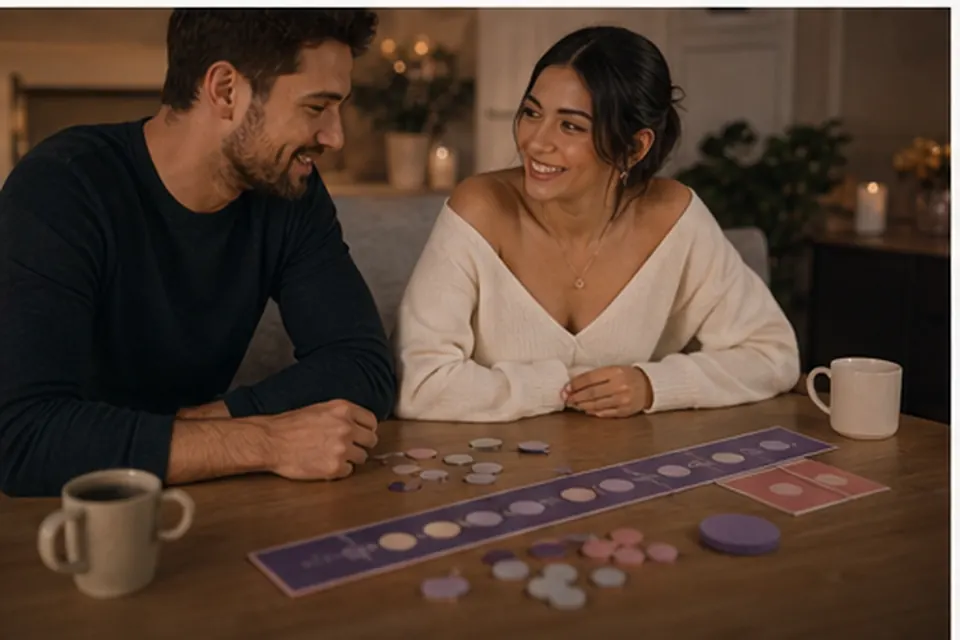
Attraction Score Game
Rate what actually creates attraction for you: looks, confidence, care, play, or consistency.
Start Playing in 3 Steps
Start solo for a quick preview, or create a private partner link so both people can answer before the reveal.
- 1
Read the cue
Look at one attraction detail at a time.
- 2
Score the pull
Rate how much that cue would change your interest.
- 3
Review the pattern
Use the top scores to see what your attraction actually rewards.
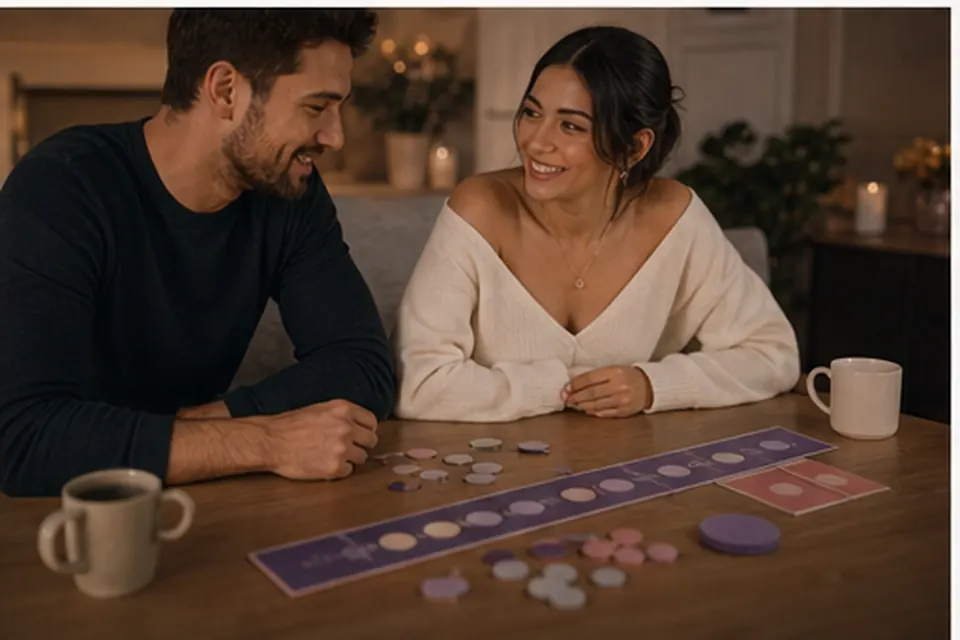
Question Deck
They dress with clear personal style.
They ask thoughtful follow-up questions.
They are funny without needing to dominate the room.
They make plans and follow through.
They are emotionally calm under pressure.
They are ambitious about something meaningful.
They make you feel wanted without making you feel chased.
They remember a tiny preference and act on it without making a show of it.
They can apologize without turning it into a speech about themselves.
What is Attraction Score Game?
Attraction Score Game is a relationship game for people who want to score which attraction cues matter most to you.
Rate what actually creates attraction for you: looks, confidence, care, play, or consistency.
The game is built around real playable content such as "They are consistent without being intense. Scale: Neutral to Very attractive", "They dress with clear personal style. Scale: Doesn't matter to Strong pull", "They ask thoughtful follow-up questions. Scale: Nice extra to Major attraction", and "They are funny without needing to dominate the room. Scale: Optional to Essential". Those examples give the page more than a generic relationship prompt because they show the exact kind of choice, question, clue, score, or challenge the player will meet.
Attraction Score Game is best for 1-2 players who want a 5-8 min interaction with 1-10 scoring, attraction profile, dating preference prompts, and solo scoring.
Why it works for couples
The format works because it makes score which attraction cues matter most to you easier to approach through play.
Instead of asking for a serious explanation first, the game starts with a concrete move: Look at one attraction detail at a time., Rate how much that cue would change your interest., and Use the top scores to see what your attraction actually rewards.. That lowers pressure and gives both people something specific to respond to.
The content is narrow enough to create useful conversation. A card like "They are consistent without being intense. Scale: Neutral to Very attractive", "They dress with clear personal style. Scale: Doesn't matter to Strong pull", "They ask thoughtful follow-up questions. Scale: Nice extra to Major attraction", and "They are funny without needing to dominate the room. Scale: Optional to Essential" points to a real preference, boundary, attraction cue, repair need, date idea, or social read instead of leaving the couple with a vague topic.
Because the interaction has a reveal, result, vote, score, winner, draw, or follow-up, the conversation has a natural second step. Players can talk about why the answer fit, what surprised them, and what they would do differently next time.
How the gameplay works
Attraction Score Game uses a score test format, so the player does not have to invent the structure from scratch.
The basic flow is: Read the cue: Look at one attraction detail at a time. Score the pull: Rate how much that cue would change your interest. Review the pattern: Use the top scores to see what your attraction actually rewards.
The current game includes 4 representative content examples in this guide, and the playable deck itself contains enough rounds to replay without feeling like the same prompt is doing all the work.
The interface keeps the action small. You answer, choose, rate, spin, draw, vote, or follow a branch, then use the on-screen result or prompt to decide what the moment means.
How to read your score
The score points to a pattern in this round; it should not be treated as a final verdict about attraction, effort, conflict, or compatibility.
High scores show what drew a stronger reaction. Low scores can be just as revealing because they show which cues, triggers, or habits did not carry as much weight.
Use the strongest score as a question: what expectation, attraction cue, repair need, or effort gap sits underneath that reaction?
When to play
Play Attraction Score Game when the relationship needs a specific starting point more than another broad talk about feelings.
It fits compatibility moments: date nights, quiet couch nights, long-distance calls, group hangs, low-energy weekends, or the moment when both people want connection but do not know how to begin.
Keep the tone curious. If the game reveals a real boundary, a strong reaction, or a repeated pattern, pause the game long enough to treat that answer with care.
Because the expected session is 5-8 min, it can work as a quick opener or as the first step into a longer conversation.
What you can take away
The useful outcome is not only finishing Attraction Score Game. It is leaving with clearer language for the choice, pattern, or preference the game surfaced.
Separate surface chemistry from the traits that keep attraction alive. That one-line payoff should become something practical: a question to ask, a plan to try, a boundary to name, or a detail to remember next time.
- Score which attraction cues matter most to you.
- Separate surface chemistry from the traits that keep attraction alive.
- A clearer read on 1-10 scoring, attraction profile, dating preference prompts, and solo scoring.
How it compares with ordinary question pages
Caleb Merridan Games turn relationship experience into playable choices, reveals, results, and next-step prompts. You still get conversation starters, but the interaction gives both people more to react to than a static list.
Static prompts can start a conversation. The game adds choices, reveal moments, and a clearer next step.
How you start
Read a list of questions and pick one to discuss.
Interactive
Make a small choice together so the conversation begins naturally.
What you compare
Mostly the answers you say out loud.
Interactive
Choices, reasons, surprises, and the pattern behind the result.
What the result means
Usually no result, or a simple score without much context.
Interactive
A score pattern that turns reactions into clearer language for attraction, conflict, effort, or relationship mood.
Pressure level
Can feel like a serious talk if the question is direct.
Interactive
Lighter than a formal check-in, but more useful than scrolling for prompts.
| What changes | Static question list | Interactive |
|---|---|---|
| How you start | Read a list of questions and pick one to discuss. | Make a small choice together so the conversation begins naturally. |
| What you compare | Mostly the answers you say out loud. | Choices, reasons, surprises, and the pattern behind the result. |
| What the result means | Usually no result, or a simple score without much context. | A score pattern that turns reactions into clearer language for attraction, conflict, effort, or relationship mood. |
| Pressure level | Can feel like a serious talk if the question is direct. | Lighter than a formal check-in, but more useful than scrolling for prompts. |
Use the result to start a conversation.
These activities are written and published by Caleb Merridan. Quizzes reflect the answers you choose; they are not clinical assessments and cannot establish what another person feels. Games offer optional prompts. You can skip a question or stop at any time.
Read our editorial standards or report a problem. If you are worried about your safety, seek appropriate support rather than relying on a score.
Play next


Frequently Asked Questions
How do I answer the Attraction Score Game rating-scale game?
Move through the prompts and rate what feels true for this moment. The useful part is usually the gap between two people's ratings.
What does a low or high Attraction Score Game score mean?
It points to how you answered today. Use it to name a topic worth discussing, not to label the relationship.
Can I play Attraction Score Game on my phone?
Yes. This rating-scale relationship game is built for mobile browsers, so you can play it on a phone, tablet, or desktop without installing an app.
Can I invite my partner to play Attraction Score Game?
Yes. Use the partner link when it is available so both people can join the same round instead of passing one phone back and forth.
Will my partner see my answers in the Attraction Score Game two-player mode?
No. In the two-player flow, each person answers first, then the game waits for both sides before opening the reveal.
Is Attraction Score Game free, or does this couple game use credits?
The basic mode is free to start. Credits are only used if you choose partner mode or the result analysis; the launch screen shows the cost before anything is spent.
What happens if I run out of credits in Attraction Score Game?
You can still use the free starting mode when it is available. Paid choices such as partner mode or the result analysis stay locked until you add or regain credits.