Key takeaways
- Attention and warmth can have several explanations; no gesture proves a hidden crush.
- Notice what actually happened before deciding what it means.
- A clear, low-pressure invitation can provide more useful information than decoding body language.
- Respect a no, an unclear answer, and circumstances where asking would create pressure.
Consider possible crush signs alongside other explanations, then choose a respectful way to ask for clarity.
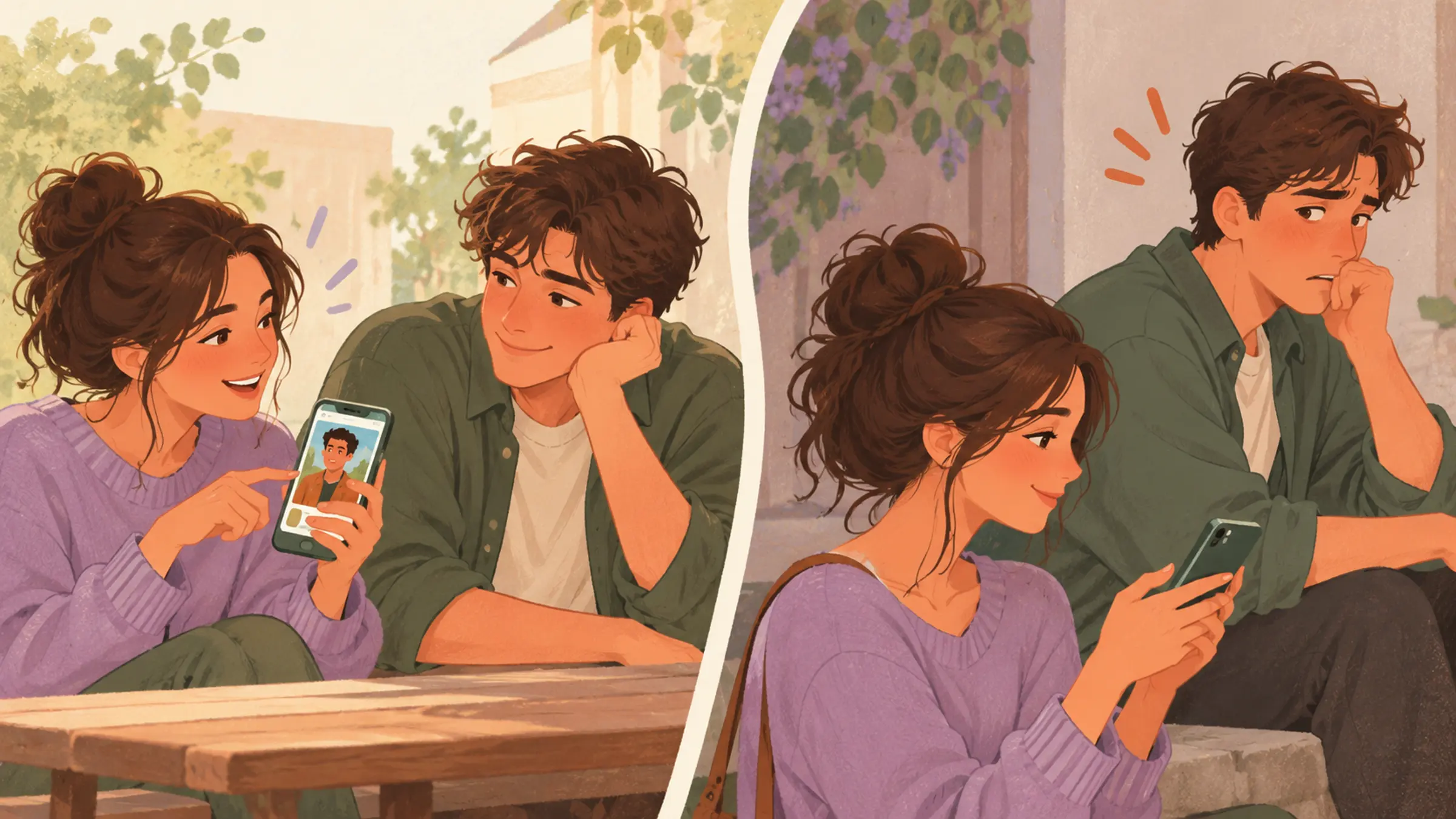
Possible signs your crush likes you but is hiding it might include seeking you out, remembering a conversation, or suggesting time together. None of these tells you for certain that someone is attracted to you—or that they are deliberately hiding it. The same behavior can be friendship, courtesy, habit, or something else entirely.
Look at what the person actually says and does, keep other explanations open, and decide whether a respectful question would be appropriate. You do not have to collect enough “crush signs” to earn permission to ask, and you do not have to keep guessing forever.
Before reading the signs: observation is not an answer
“They asked me to join them for lunch” is something you observed. “They are secretly in love with me” is one possible interpretation. The first does not establish the second, even if you hope it does.
In a small speed-dating study, researchers examined how accurately people perceived attraction and how their own interest related to those judgments. The study involved brief opposite-sex dates, not every kind of crush, and it does not validate a list of gestures. It is a useful reminder that an impression and another person's answer are different kinds of information.
10 possible signs—and what else they could mean
These are reasons you might notice a connection, not a scorecard. No number of them can reveal someone's private feelings.
1. They make a specific plan to spend time with you
They suggest a walk after an event or ask if you want to see an exhibition together. Choosing time with you may show that they enjoy your company. It could also be a straightforward invitation between friends. If the distinction matters, you can ask whether they mean it as a date.
2. They follow up on something you mentioned
Perhaps they ask how your presentation went or remember that you were waiting for news. This shows they paid attention in that moment. Thoughtful friends and colleagues do this too; remembering a detail is not a confession.
3. They start conversations when there is no practical reason
A message about a shared joke or a question after a group activity can be an invitation to keep talking. Some people like staying in touch with friends in exactly this way. Notice whether conversation is welcome on both sides rather than measuring response times.
4. They share a little more of their own life
They tell you what they are excited about or ask for your opinion on a decision. That may reflect comfort and trust, neither of which automatically means romantic interest. You can enjoy a conversation without assuming it has to become a date.
5. They ask whether you would enjoy doing something together
An invitation that considers your preferences can be a thoughtful way to connect. The activity may still be social rather than romantic. A question such as “Are you thinking of this as a date or a friendly hangout?” makes the distinction clearer without accusing them of hiding anything.
6. They give you a compliment that feels personal
They might say they admire how you handled a difficult project or like your sense of humor. A compliment can express appreciation, flirtation, or both. You are free to accept it without deciding what it means—and free to say if a comment makes you uncomfortable.
7. They seem different around you
Someone who is usually talkative might become quiet, or a reserved person might become unusually animated. People respond differently to stress, social settings, and unfamiliar situations. Do not treat eye contact, a pause, or a change in tone as a secret code. Our guide to awkward behavior and other explanations looks more closely at this problem.
8. They look for a way to continue a conversation
They might send you an article related to a topic you discussed or ask another question before leaving. That can show interest in the conversation. It does not establish what kind of relationship they want, and one quiet day does not cancel a connection.
9. They make space for your response
They ask whether an invitation works for you and accept that you may be busy or uninterested. This is a respectful way to interact, whether the invitation is romantic or friendly. It is more useful to notice how a person treats your answer than to try to decode how long they looked at you.
10. They say something that invites clarity
“I would like to take you on a date” is more informative than “We should hang out sometime.” Even then, interest in a date does not promise a relationship or require you to accept. If you already have a close friendship, signs a friend may want to date explores that particular transition.
Signals that are easy to overread
Silence, jealousy, teasing, a glance, or a delayed reply cannot tell you that someone likes you but is hiding it. A person may be distracted, uncomfortable, friendly, shy, or uninterested; you cannot choose the correct explanation from the outside.
Jealousy also deserves care. Trying to restrict who you see or making you feel guilty is not a flattering sign to pursue. love is respect's dating guidance emphasizes equal say and respected boundaries, and notes that excessive jealousy and guilt are not signs of a healthy partnership.
If a person's behavior feels intrusive or unsafe, you do not need to decide whether they have a crush before setting a boundary or seeking support.
How to test the waters without pressure
First consider the setting. If you supervise the person, they depend on you, or a workplace or school rule makes a romantic approach inappropriate, do not put them in a position where declining could feel costly. Keep the interaction professional and follow the relevant rules.
When an invitation is appropriate, make it specific and easy to decline. For example: “I enjoy talking with you. Would you like to get coffee with me as a date? No pressure if not.” This is a hypothetical script; use your own words and choose a setting that gives them room to answer privately and comfortably.
- Yes: Agree on a plan if you both want to. A date is a chance to learn more, not a commitment to anything beyond it.
- No: Thank them for being clear and do not try to persuade them. You may both need some space to reset.
- Unclear: Leave the invitation there. If they want to revisit it, they can; you do not have to interpret silence as a hidden yes or wait indefinitely.
If you would rather reflect before asking, the Does Your Crush Like You Back? quiz can help you organize your impressions. It cannot determine someone else's feelings. For an established friendship, Does My Guy Friend Like Me? considers that history in more detail.
Frequently asked questions
How can I tell if my crush likes me but is hiding it?
You cannot know hidden feelings from a checklist. Notice their actual choices and words, consider other explanations, and ask a clear, low-pressure question if the situation makes that appropriate.
Does acting nervous around me mean my crush likes me?
Not necessarily. Nervousness can have many causes, and some people are quiet or awkward in situations that have nothing to do with attraction. It is not a reliable answer on its own.
Are mixed signals a sign of a secret crush?
Mixed signals do not establish a secret crush. They may reflect changing circumstances, friendliness, uncertainty, or a lack of interest. Ask about the decision that matters to you instead of trying to solve their motives.
What should I do if my crush says no or gives an unclear answer?
Respect a no without trying to persuade them. If the answer is unclear, you can leave the invitation there and allow space; you do not need to keep asking or wait indefinitely.
Written by Caleb Merridan for reflection and relationship education. Editorial policy · Report a correction