Key takeaways
- There is no required number of months' salary to spend on a ring.
- Set an all-in limit after essential expenses, existing obligations, reserves and other goals.
- Include the stone, setting, tax and any resizing or other fees when comparing quotes.
- Discuss the wearer's preferences and review return, grading and financing terms before buying.
Choose an engagement ring budget that fits your finances and your partner's preferences, then compare the complete purchase price.
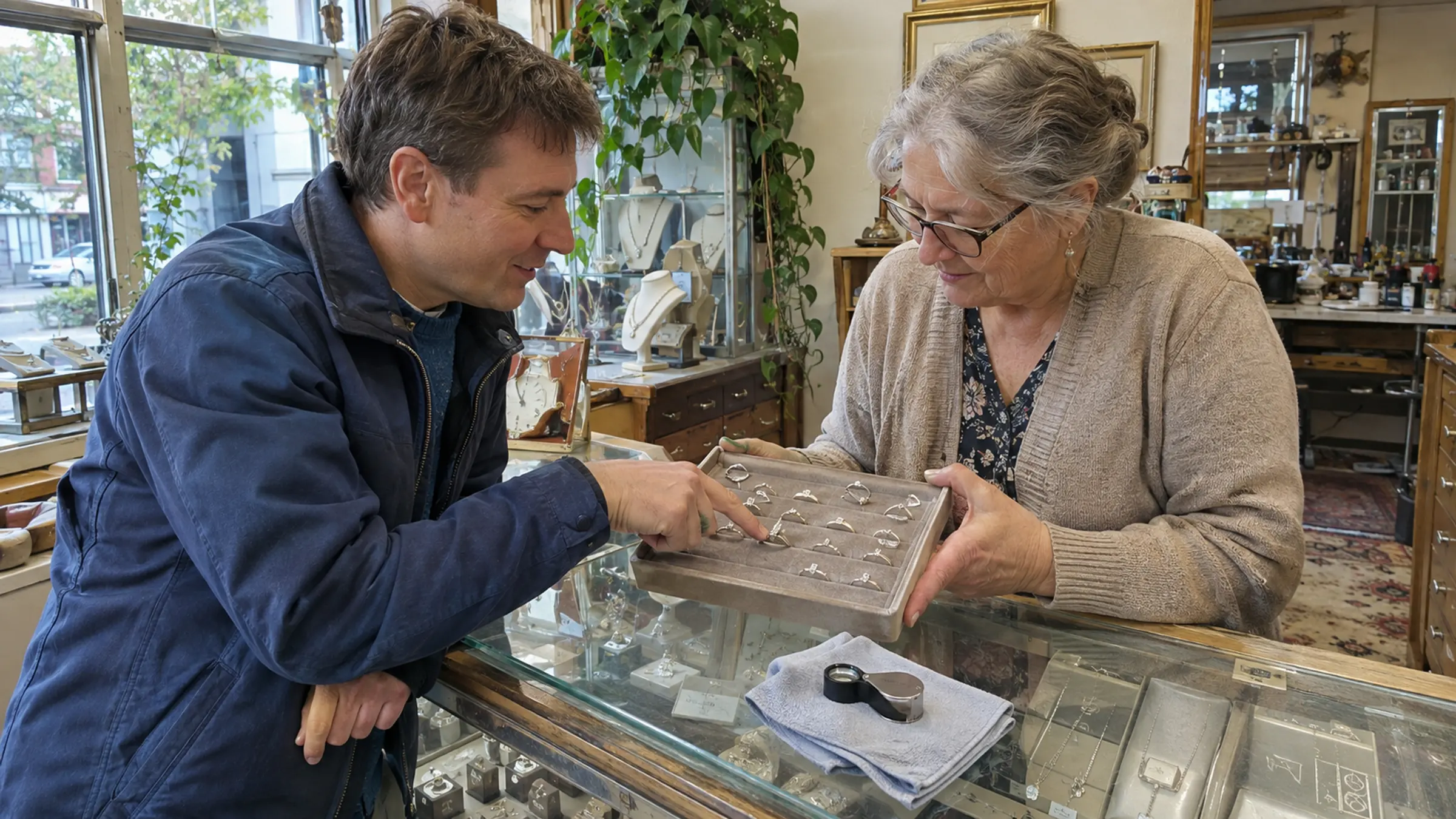
Spend an amount on an engagement ring that fits your finances and the wearer's preferences, including the full purchase price rather than just the stone or setting. Start with money you can use after essential expenses, existing obligations, an emergency reserve and other agreed goals. There is no required number of months' salary, and a meaningful ring does not have to match a survey average.
Set a ceiling before shopping, then ask for written quotes that include the setting, tax and any resizing or other charges. If the ring you want does not fit, you can change the design, save longer or revisit the limit together rather than committing to a payment you have not planned for.
This is general US consumer information, not individual financial advice. It has not been reviewed by a financial professional.
What does the average engagement ring cost?
The Knot's 2026 Real Weddings Study report lists $4,600 as average engagement ring spending. Its methodology release describes 10,474 self-reported US couples who married in 2025 and were recruited by email from The Knot or WeddingWire members; the broader report also draws on other research.
The report page we reviewed does not state how many people answered the ring-price question or the exact mix of stones in that calculation. The figure is not established as a nationally representative average, a median or a price for natural or lab-grown diamonds alone. It is context from one survey, not a recommendation for your purchase.
If you are also planning a celebration, remember that the ring may be a separate expense. Our average wedding cost guide explains which costs are included in one wedding survey and which are reported separately.
Do you need to spend three months' salary?
No. You may hear advice to spend two or three months of salary, but neither is a financial requirement. The same income can support very different budgets depending on housing, debt, dependents, existing savings and upcoming plans. A salary multiple does not tell you what you can comfortably pay.
You may choose to spend more or less than a suggested rule, or choose no ring at all. The useful question is whether the complete purchase fits your circumstances and whether the intended wearer would enjoy it—not whether it reaches a number someone else proposed.
Calculate an all-in engagement ring budget
Start with cash you are considering for the purchase. Before assigning a ring price, identify amounts needed for near-term bills, existing debt obligations, emergencies and other goals you have agreed to protect. If you are saving toward a future purchase, use contributions you can sustain rather than assuming an unconfirmed gift or bonus will arrive.
Possible all-in ring limit = cash designated for this decision − amounts you still need to reserve for other priorities.
That is a starting calculation, not a guarantee of affordability. Check the timing of your bills and how much flexibility remains after the purchase. If the result is zero or negative, a lower-cost option or more time to save may be a better fit. Our guide to saving for a wedding as a couple can help you compare the ring with other upcoming goals.
A hypothetical example
Suppose someone has $4,000 in cash they are considering for a ring. They decide to keep $1,000 for an upcoming move and $500 for bills, leaving $2,500 as the most they are willing to spend in total. Those amounts are invented for illustration, not recommended reserve levels.
| Cost in this example | Amount |
|---|---|
| Ring including stone and setting | $2,250 |
| Sales tax, assumed for this example | $150 |
| Resizing, assumed for this example | $100 |
| Complete purchase | $2,500 |
Now consider a ring with a $2,500 sticker price. If the same $150 tax and $100 resizing charges applied, the total would be $2,750, or $250 above that ceiling. Actual tax and service charges depend on the purchase; ask for the actual written total rather than applying the example's figures to every quote.
Talk about preferences without losing the surprise
The wearer may care about a particular metal, stone, profile, comfort or whether the ring is practical for their daily work. They may prefer a simple band, an heirloom, a different gemstone or no engagement ring. Do not assume one style or material is right because of gender, tradition or what appears online.
You can discuss a range and priorities while keeping the proposal itself a surprise. Try: “What would you enjoy wearing, and is there a spending limit you would feel comfortable with?” If you plan to purchase separately or one person offers to contribute, agree on the amount and any conditions without making the gift a test of commitment.
If an upgrade is appealing, discuss it as an option rather than a promise. A less expensive ring now does not require a more expensive replacement later, and a higher price does not establish how much someone cares.
Compare the complete ring, not just the center stone
Ask each seller to quote the same combination of stone, setting and services so you can compare like with like. A lower stone price may not mean a lower finished-ring price if the setting or other work is extra.
| What to compare | Questions to ask |
|---|---|
| Stone and setting | Are the stone and setting both included? What material, size and work are specified? |
| Diamond characteristics | If it is a diamond, what are its cut, color, clarity and carat weight? Is a grading report provided? |
| Origin and treatment | Is the stone natural or laboratory-grown? Has it been treated, and does it need special care? |
| Extra costs | What are the tax, resizing, shipping, engraving and any future maintenance charges? |
| Purchase terms | What are the return, exchange, warranty and delivery conditions, including for a custom ring? |
The Federal Trade Commission's gemstone buying guide recommends getting a seller's refund and return policy in writing and explains the diamond 4Cs. A grading report describes characteristics; ask what it covers rather than treating it as a guaranteed resale value or an appraisal of the finished ring. Keep the description of the stone and any treatments with your receipt.
Natural and laboratory-grown diamonds are options, as are other gemstones and plain bands. A lab-grown diamond is a diamond made in a laboratory; moissanite is a different gemstone, not a lab-grown diamond. Ask what you are buying and compare actual quotes. Prices vary with the particular stone, setting and seller; neither origin nor purchase price guarantees a future resale amount.
Be clear about financing before agreeing
If you are considering credit, compare the full amount you would repay, the interest rate, fees, payment schedule and what happens if a payment is late. A manageable-looking monthly payment can still affect other obligations. You can also compare saving longer, changing the ring or setting a lower limit.
Some promotions use deferred interest: depending on the terms, interest may be charged on the purchase if the qualifying balance is not paid in full by the end of the promotional period. The Consumer Financial Protection Bureau explains these offers. A deferred-interest offer is not the same as assuming every promotion labeled 0% works identically; read the agreement and ask how payments are applied.
If you choose optional ring insurance, ask what property and causes are covered, the deductible, valuation requirements and premium. Event cancellation or venue liability insurance does not automatically insure a ring. A seller's warranty may also have a different purpose from insurance.
Make the final choice together
Before paying, check three things: the total is within your agreed ceiling, the description matches the wearer's priorities, and the seller has explained the purchase and return terms in writing. If one answer is unclear, ask for time to compare rather than increasing the budget at the counter.
If the ring and wedding will draw on the same savings, include both in the plan. The wedding budget calculator can help organize event costs; track the ring separately if it is not included in that estimate. Our guides to who pays for the wedding and combining finances after marriage can help you discuss other choices without assuming a particular split.
The right amount is the amount you can explain and comfortably choose together. It is not a score for the relationship.
Frequently asked questions
How much should you spend on an engagement ring?
Choose an all-in amount you can afford after essential expenses, existing obligations, reserves and other priorities. Include the setting, tax and any additional fees, and consider the wearer's preferences.
Do you have to spend three months' salary on an engagement ring?
No. A salary-multiple convention is not a financial requirement and does not account for your expenses, savings or goals. Use your own circumstances to set a limit.
What is the average engagement ring cost?
The Knot's 2026 Real Weddings Study reports $4,600 as average engagement ring spending. Its broader study used self-reported responses from 10,474 US couples married in 2025, but the ring-price-specific sample size is not stated on the inspected report page. An average is context, not a target.
Is a lab-grown diamond the same as moissanite?
No. A lab-grown diamond is a diamond made in a laboratory; moissanite is a different gemstone. Ask the seller to identify the material, origin, treatments and any grading documentation in writing.
Is it okay to buy an engagement ring below the average price?
Yes. A survey average is not a minimum or a measure of commitment. Choose an option that fits your finances and the wearer's preferences, whether that is below or above a reported average.
Written by Caleb Merridan for reflection and relationship education. Editorial policy · Report a correction