
Key takeaways
- For partner questions, the person being asked supplies their own answer; there is no universal key.
- Guess and reveal for fun, with or without points; a missed guess is not a relationship score.
- Either person can pass or stop, and a host should share only answers the couple approved.
- The optional general-knowledge round has a separate, sourced answer key.
Play partner-guessing rounds for new and established couples, then try a general-knowledge round with a checked answer key.
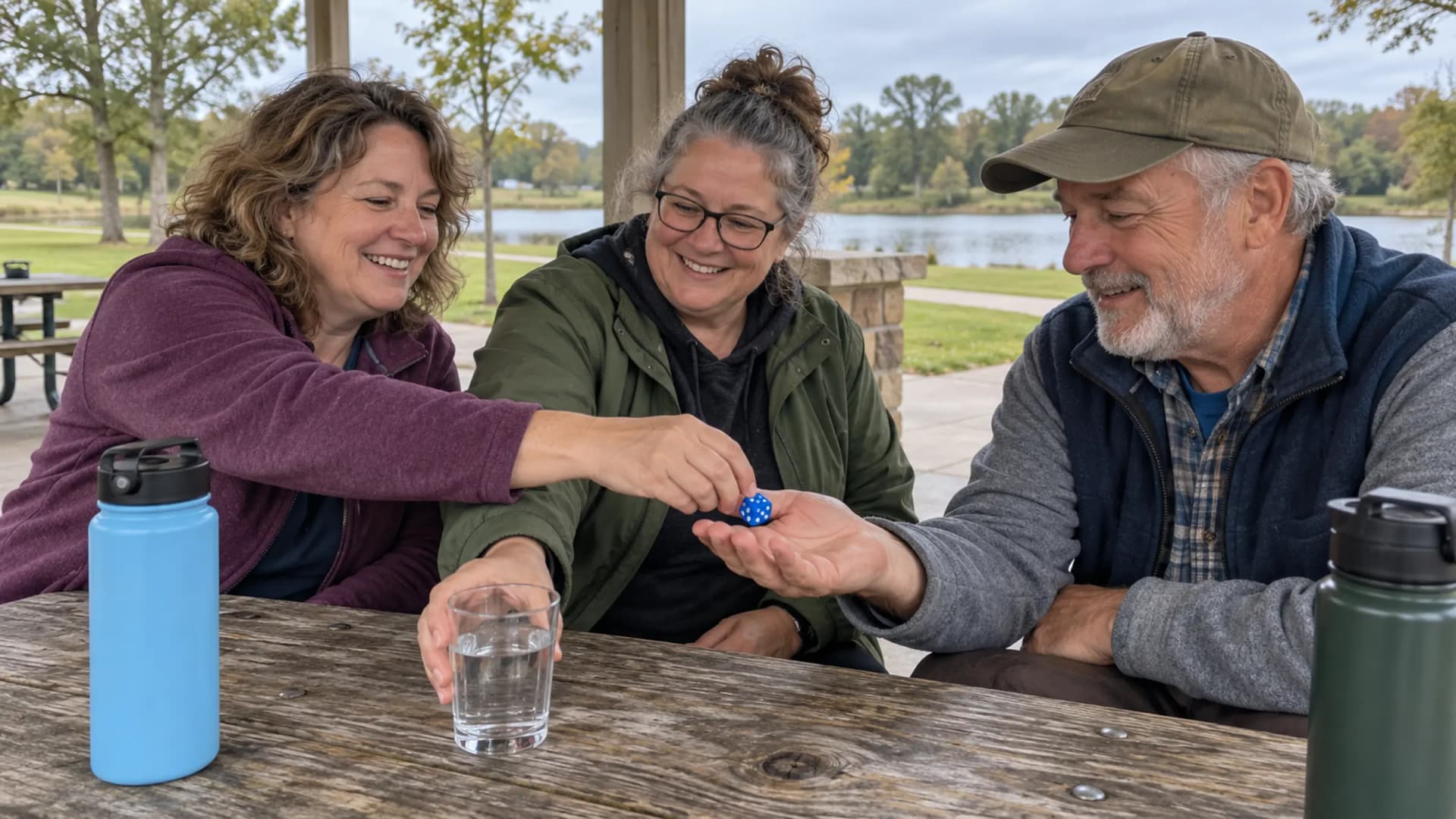
These trivia questions for couples let you guess what your partner might choose, remember or enjoy—and then hear their answer. For example: “Which kind of outing would I choose on a free afternoon?” or “Which shared activity would I like to repeat?” You can play just the two of you, adapt a few questions for guests, or try the separate fact round at the end.
The first 50 questions are about the people playing: your partner supplies their own answer, so there is no universal answer key. The last 10 are general-knowledge questions with checked answers. Neither round measures how good your relationship is.
How to play couple trivia
- Choose a few questions together. Start with a topic everyone is comfortable discussing. You do not need to use all 60.
- Write or quietly choose your own answer. For a partner question, the person being asked decides what answer they want to give. A preference can change, and “I don't know” is allowed.
- Let the other person guess, then reveal. Switch roles for the next question. If an answer leads to a story, you can stop guessing and enjoy the conversation.
- Use points only if you both want them. You might award one point for a matching answer or play without a score. Do not use alcohol, embarrassment or a personal disclosure as a penalty.
Either person can skip a question, change the topic or stop without explaining. The love is respect guide to boundaries recommends asking about and respecting each person's limits. A wrong guess does not show that someone cares less; it may simply give you something new to ask about.
Everyday preferences: guess your partner's answer
For each question, read “I” as the person whose answer is being guessed. That person can write a short answer or choose to pass.
- Which kind of outing would I choose on a free afternoon?
- What temperature do I usually prefer in a room when I am resting?
- Which part of a trip would I most enjoy planning: the route, the food, the activities or something else?
- What is a small purchase I would happily make at a neighborhood market?
- If I had to choose a place to read, what kind of setting would I pick?
- Which routine would I most like to make easier on a busy morning?
- What kind of music or other sound would I choose during a long drive?
- What is one everyday object I tend to keep close at hand?
- Would I rather receive plans well ahead of time or decide closer to the day?
- Which ordinary activity would I most enjoy doing with company?
Shared memories: compare your own answers
These questions work best when there is a memory both people want to discuss. New couples can choose a recent meeting or skip a question. Two people may remember the same moment differently without either answer being a failure.
- Which shared meal would I most like to have again?
- What was one detail I noticed about a place we visited together?
- Which small surprise from a shared day do I remember most clearly?
- What is one outing that felt easier or more enjoyable than I expected?
- Which conversation topic from our time together would I like to revisit?
- What is a funny mix-up I would feel comfortable telling as a story?
- Which shared activity made the time pass especially quickly for me?
- What is a sound I associate with a place we have been together?
- Which simple plan from a previous week would I choose to repeat?
- What is one new thing I learned about you during an ordinary day?
If you remember different details, you can compare them without deciding whose memory is the official version. A follow-up can be as simple as “What stands out to you about that?”
Funny and imaginative partner trivia
- If I ran a tiny museum, what kind of object would I put in the first display?
- What unusual workshop would I be curious to try for one afternoon?
- Which fictional mode of transport would I choose for a short trip?
- If I invented a holiday for a harmless everyday pleasure, what would it celebrate?
- What silly title would I give a book about my favorite hobby?
- Which animal would I pick as a mascot for a very relaxed team?
- If I could instantly learn one playful skill, what might I choose?
- What imaginary themed restaurant would I be most willing to visit?
- Which household task would I turn into a game if I could?
- If I picked a soundtrack for doing errands, what would its first song or sound be?
There is no need to defend an answer or keep it consistent next time. For an interactive trivia game for couples, try Couple Trivia after choosing from this list.
Plans and preferences to discover
- What kind of place would I choose for a short break from my usual routine?
- Which skill would I like to practice with a friend or partner?
- What kind of celebration would I enjoy for a small milestone?
- If we had a quiet afternoon, what would I suggest doing first?
- What is one local place I might like to explore?
- Which type of event would I be curious about: a concert, a class, a game or another option?
- What would I want to know before agreeing to a new plan?
- What kind of reminder helps me prepare for something I am looking forward to?
- If we planned a meal together, which part would I prefer to choose?
- What is one question I would enjoy being asked more often?
An imagined plan is not a promise. You can learn about an idea first and decide later whether its timing, cost and accessibility work for both people.
Trivia questions for newer couples
You do not need a long shared history for this round. The person being guessed can choose an answer now—even if they have never thought about it before.
- Which breakfast would I order if I had a completely free morning?
- Would I choose a competitive game, a cooperative game or no game for a relaxed evening?
- What animal would I be most excited to spot on a wildlife walk?
- Which small skill would I enjoy showing someone how to do?
- Would I pick a window seat or an aisle seat for a long trip?
- Which scent would I choose for a candle or room fragrance, if any?
- What makes me laugh more: a pun, an awkward mishap or an absurd made-up story?
- What drink would I be curious to order at an unfamiliar place?
- Which season would I choose for a day trip?
- Would I rather try a dance class, a pottery class or something else entirely?
If you would rather take turns answering without a guessing game, try these get-to-know-you questions for couples or choose a few of the 20 couple questions. For a more affectionate direction, explore the romantic questions for couples.
Optional general-knowledge round
These 10 questions have factual answers rather than partner-selected answers. Guess separately or as a team; the answer key is below. For a mixed group, alternate a couple-approved personal question with a general-knowledge question so guests who do not know the couple well can join in too.
- Which planet is the largest in our solar system?
- Which planet is third from the Sun?
- What kind of weather feature is Jupiter's Great Red Spot?
- What is Earth's only natural satellite called?
- About how long does sunlight take to reach Earth?
- Which is the largest ocean basin on Earth?
- Which mammals are capable of sustained, flapping flight?
- How many interlaced rings are in the Olympic symbol?
- What is the capital city of Australia?
- Which chess piece moves in an L-shape?
Answer key
- 1: Jupiter. NASA's Jupiter facts describes it as the largest planet.
- 2: Earth, according to NASA's Earth facts.
- 3: A giant storm on Jupiter, as described by NASA.
- 4: The Moon, Earth's only natural satellite, according to NASA's Moon facts.
- 5: About eight minutes, according to NASA's Earth facts.
- 6: The Pacific Ocean, according to the National Ocean Service.
- 7: Bats, according to the National Park Service.
- 8: Five, according to the International Olympic Committee.
- 9: Canberra, according to the Australian government.
- 10: The knight, as explained in this chess rules guide.
How to adapt the game for guests or a video call
For a group, ask the couple to pick questions and approve the answers they are happy to share before the host reads anything aloud. Avoid account passwords, private health details, sexual history or a story involving someone who has not agreed to share it. Guests who do not know the couple well can pass or join the general-knowledge round instead.
On a video call, each person can write an answer on paper, show it only if they want to, and take turns guessing. You can play without a timer or use an accessible format that suits everyone. If the group would rather talk than score, drop the points. A relationship check-in is a separate option for an issue you both want to discuss; trivia is not a substitute for resolving a conflict or getting professional help.
If a question creates fear, pressure or concern about retaliation, you do not have to continue or disclose anything. Seek independent support from someone you trust or an appropriate local service when safe.
Common questions
What are good couple trivia questions?
Try questions about everyday preferences, shared memories or imagined plans, such as which outing your partner would choose on a free afternoon. The person being asked decides their own answer.
How do you play couple trivia with two people?
Each person privately chooses an answer, the other makes a guess, and the person reveals their answer if they want to. Take turns and use points only if both people enjoy them.
Can guests play couple trivia?
Yes. Ask the couple to approve the questions and answers before a host shares them, allow guests to pass, and avoid private or embarrassing information. Guests can also play the separate general-knowledge round.
Can new couples play trivia without many shared memories?
Yes. Choose questions about present-day preferences or imagined plans, let each person decide their own answer, and skip any topic either person would rather leave for another time.
What does a wrong answer say about our relationship?
A missed guess only means that the guess did not match the answer given. Preferences and memories can change, and a game cannot measure compatibility or relationship health.
Choose a question that sounds enjoyable, make a guess if everyone wants to and let the person with the answer decide what to share.
Written by Caleb Merridan for reflection and relationship education. Editorial policy · Report a correction